
Retirement Withdrawal Strategies to Make Your Nest Egg Last a Lifetime
What you'll learn
 Retirement Income Needs AssessmentDynamic Withdrawal StrategiesTax-Efficient Account SequencingMitigating Sequence of Returns Risk
Retirement marks a significant life transition, offering freedom from the daily grind and the opportunity to pursue passions. However, this exciting new chapter also brings a critical financial challenge: how to responsibly draw income from your accumulated savings without the terrifying prospect of running out of money. Unlike your working years, where a steady paycheck was the norm, retirement requires a deliberate and well-thought-out withdrawal strategy. Understanding how to navigate your various retirement accounts and implement smart spending habits is paramount to ensuring your nest egg lasts as long as you do, providing peace of mind throughout your golden years.
Understanding Your Retirement Income Needs
Before you can craft an effective withdrawal strategy, you must first have a clear picture of your actual income needs in retirement. This isn't just about covering basic living expenses; it encompasses a holistic view of your desired lifestyle.
Estimating Expenses
Start by creating a detailed budget that reflects your expected post-work expenditures. Consider both fixed costs like housing, utilities, and insurance, and variable costs such as travel, hobbies, dining out, and gifts. Many retirees find their expenses decrease in some areas (like commuting) but increase in others (like healthcare or leisure activities). Be realistic and thorough.
The Impact of Inflation
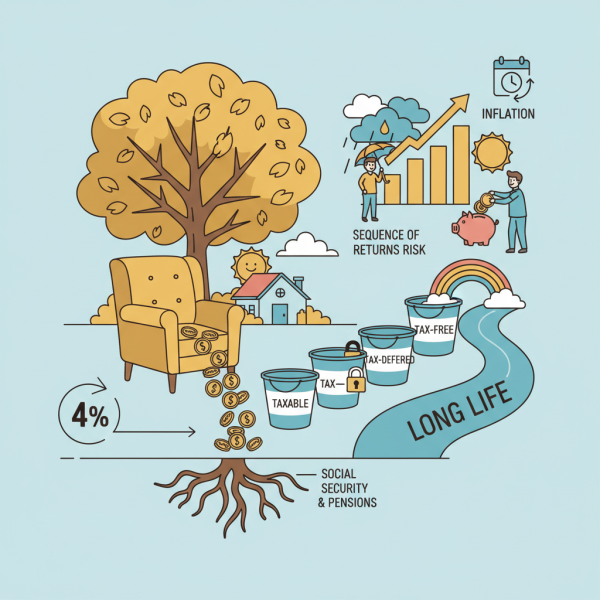
Inflation is a silent wealth killer. What seems like a sufficient amount today will buy less in 10, 20, or 30 years. Your withdrawal strategy must account for the eroding power of inflation, ensuring your purchasing power is maintained over time. Many financial plans assume a 2-3% annual inflation rate, which needs to be factored into your long-term projections.
Healthcare Costs
One of the largest and most unpredictable expenses in retirement is healthcare. Even with Medicare, out-of-pocket costs can be substantial, covering premiums, deductibles, co-pays, and services not fully covered. It's crucial to budget generously for healthcare, perhaps even setting aside a dedicated portion of your savings for this purpose.
The 4% Rule: A Popular Starting Point
When discussing retirement withdrawals, the "4% rule" frequently comes up. Developed by financial planner William Bengen, this rule suggests that retirees can safely withdraw 4% of their initial portfolio balance in their first year of retirement, then adjust that dollar amount for inflation in subsequent years, and their money should last for at least 30 years.
For example, if you retire with $1,000,000, you would withdraw $40,000 in your first year. In the second year, if inflation was 3%, you would withdraw $40,000 * 1.03 = $41,200, and so on.
Criticisms and Variations
While a helpful guideline, the 4% rule isn't foolproof. It was based on historical market data and assumes a fixed asset allocation. Critics argue that current market conditions (like lower interest rates and potentially lower future returns) might necessitate a lower initial withdrawal rate, perhaps 3% or 3.5%. Some variations suggest a "dynamic" approach, where withdrawal amounts are adjusted based on portfolio performance, rather than strictly by inflation.
Navigating Sequence of Returns Risk
One of the most significant threats to a successful retirement is "sequence of returns risk." This refers to the danger that poor market returns early in retirement can disproportionately harm your portfolio's longevity, even if long-term average returns are favorable.
Imagine withdrawing from your portfolio when the market is down significantly. You're forced to sell more shares at a lower price to meet your income needs, leaving fewer assets to recover when the market eventually rebounds. This "early drawdown" can severely deplete your capital.
Mitigating the Risk
To combat sequence of returns risk, consider these strategies:
- Cash Bucket Strategy: Keep 1-3 years' worth of living expenses in cash or highly liquid, low-risk investments. This "cash bucket" allows you to cover expenses without selling investments during market downturns, giving your growth assets time to recover.
- Dynamic Withdrawals: Be willing to reduce your spending in years following poor market performance. This flexibility can significantly extend the life of your portfolio.
- Asset Allocation: Maintain a diversified portfolio appropriate for your risk tolerance, but also recognize that a too-aggressive portfolio early in retirement can amplify sequence of returns risk.
Tax-Efficient Withdrawal Order
The order in which you tap into your different retirement accounts can have a substantial impact on your tax bill throughout retirement. A smart withdrawal strategy aims to minimize taxes, allowing more of your money to work for you.
General Guideline (Often Recommended)
- Taxable Accounts (e.g., Brokerage Accounts): Start here. These accounts typically consist of investments where you've already paid taxes on contributions. Long-term capital gains and qualified dividends are often taxed at preferential rates. This strategy allows your tax-advantaged accounts (like IRAs and 401ks) to continue growing tax-deferred or tax-free for as long as possible.
- Tax-Deferred Accounts (e.g., Traditional 401k, Traditional IRA): Next, tap into these accounts. Withdrawals from these accounts are taxed as ordinary income because contributions (and growth) were tax-deductible or tax-deferred. By delaying these withdrawals, you might be able to draw them down in lower tax brackets, especially if you have fewer other income sources. You'll also need to consider Required Minimum Distributions (RMDs) which typically begin at age 73 (or 75 depending on birth year), forcing you to take taxable withdrawals regardless of your needs.
- Tax-Free Accounts (e.g., Roth IRA, Roth 401k): Ideally, these should be the last accounts you draw from. Qualified withdrawals from Roth accounts are completely tax-free, as you paid taxes on the contributions upfront. By preserving these accounts, you create a valuable source of tax-free income later in retirement, which can be particularly useful for managing your tax bracket or covering large, unexpected expenses without tax consequences.
This general order can be adapted based on individual circumstances, such as needing to do Roth conversions in early retirement or having unique income needs.
Dynamic Withdrawal Strategies: Flexibility is Key
While the 4% rule provides a simple benchmark, a more sophisticated approach involves dynamic withdrawal strategies. These methods emphasize flexibility and adaptability, adjusting your spending based on market performance and your financial situation.
Principles of Dynamic Withdrawal
- Be Willing to Adjust: If your portfolio performs exceptionally well, you might take a slightly higher withdrawal. Conversely, during periods of poor market performance, you should consider reducing your withdrawals.
- Guardrails Approach: Set upper and lower "guardrails" for your withdrawal rate. For example, if your withdrawal rate (annual withdrawal divided by current portfolio value) rises above 5%, you might cut your spending by 10%. If it falls below 3%, you might allow for a small increase.
- Prioritize Essentials: Ensure your core living expenses are covered by more stable income sources or a conservative withdrawal rate. Discretionary spending can then be adjusted based on portfolio health.
Considering Other Income Streams
Your withdrawal strategy isn't solely about your investment portfolio. Other income streams can play a crucial role in your financial security.
- Social Security: Optimizing when to claim Social Security benefits is vital. Delaying benefits past your full retirement age (up to age 70) can significantly increase your annual payout, providing a larger, inflation-adjusted income stream for life.
- Pensions: If you're fortunate enough to have a pension, understand its payout options and how it integrates with your other income sources.
- Annuities: Certain types of annuities, particularly immediate annuities, can provide a guaranteed income stream for life. While they involve giving up control over a lump sum, they can be a powerful tool for longevity insurance, especially for a portion of your portfolio.
Common Mistakes to Avoid
Even with careful planning, some pitfalls can derail your retirement. Being aware of these common mistakes can help you steer clear of them.
- Ignoring Inflation: As mentioned, failing to account for inflation will erode your purchasing power over time. Your spending power will effectively shrink if your withdrawals don't keep pace.
- Overspending Early in Retirement: The initial years of retirement often see higher spending on travel and leisure. While enjoying this phase is important, overspending too much too soon can put immense pressure on the rest of your retirement.
- Not Having a Contingency Plan: Unexpected events like a health crisis or market crash can throw a wrench into even the best-laid plans. Having an emergency fund or a flexible spending strategy is essential.
- Failing to Rebalance: Over time, your asset allocation will drift. Regularly rebalancing your portfolio ensures it remains aligned with your risk tolerance and withdrawal strategy.
Summary
Crafting a robust retirement withdrawal strategy is fundamental to enjoying a financially secure post-work life. It begins with accurately assessing your future income needs, considering factors like inflation and healthcare costs. The 4% rule offers a useful starting point, but dynamic strategies that adapt to market conditions and careful planning to mitigate sequence of returns risk are vital. Maximizing tax efficiency by strategically drawing from different account types (taxable, then tax-deferred, then tax-free) can significantly extend your portfolio's longevity. Furthermore, integrating other income streams like optimized Social Security benefits and avoiding common pitfalls like early overspending or ignoring inflation will bolster your financial resilience, ensuring your retirement savings provide the comfortable lifestyle you envision for decades to come.
Comprehension questions
 Explain the general recommended order for withdrawing money from different types of retirement accounts (taxable, tax-deferred, tax-free) and why this order is suggested.How does inflation impact a retirement withdrawal strategy, and why is it important to account for it?