
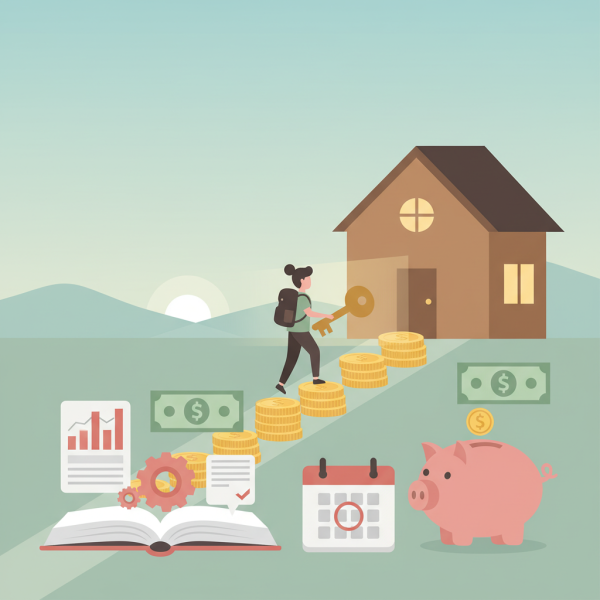
Roadmap to Move from Renting to Owning Your First Home
What you'll learn
 Down Payment SavingsFinancial ReadinessSmart BudgetingHomebuyer Assistance Programs
The dream of owning a home is a powerful motivator for many, marking a significant milestone of financial independence and stability. Yet, the journey from renting to homeownership often begins with a formidable challenge: saving for a down payment. This crucial first step can seem daunting, but with a strategic roadmap and disciplined approach, it is an entirely achievable goal. This article will equip you with practical tips, smart strategies, and a clear path to accumulate the funds needed to unlock the door to your very first home.
Understanding the Down Payment Landscape
A down payment is an upfront sum of money you pay towards the purchase of a home. It's a percentage of the home's total price, and its size can significantly impact your mortgage terms, monthly payments, and overall interest paid. While the traditional advice often suggests a 20% down payment to avoid Private Mortgage Insurance (PMI), many options exist with lower down payment requirements, sometimes as little as 3-5% for conventional loans, and even 0% for specific government-backed loans like USDA or VA loans. Understanding these options is vital, as it allows you to set a realistic and achievable savings target.
Lower down payments can make homeownership more accessible, but it's important to weigh the pros and cons. A smaller down payment often means higher monthly mortgage payments and the potential for PMI, an extra cost that protects the lender in case you default. Conversely, a larger down payment demonstrates greater financial stability to lenders, can secure a lower interest rate, and significantly reduces the total amount you finance. Researching current loan options and their respective down payment requirements for your target location is a critical first step.
Assessing Your Financial Readiness
Before you even begin saving, an honest assessment of your current financial situation is paramount. This involves a deep dive into your income, expenses, debts, and existing savings. Knowing precisely where your money goes each month is the foundation of any successful savings plan.
- Create a Detailed Budget: Track every dollar in and every dollar out for at least one to three months. This will reveal your spending patterns and highlight areas where you can cut back.
- Calculate Your Current Net Worth: Understand your assets (savings, investments, retirement accounts) versus your liabilities (credit card debt, student loans, car loans). A positive net worth is a good indicator of financial health.
- Review Your Debt-to-Income Ratio: Lenders look at this ratio to determine your ability to manage monthly payments. A lower ratio (typically below 36%) makes you a more attractive borrower. Focus on reducing high-interest debt first.
- Establish an Emergency Fund: Before dedicating all extra funds to a down payment, ensure you have an emergency fund covering 3-6 months of essential living expenses. This prevents you from tapping into your down payment savings for unexpected costs.
Comprehension questions
 What is the traditional down payment percentage often recommended, and what are the benefits of a larger down payment?What are the four key steps involved in assessing your financial readiness before you start saving for a down payment?Name three specific budgeting and income augmentation strategies that can help supercharge down payment savings.How can first-time homebuyer programs and assistance initiatives help individuals achieve homeownership sooner?