
Mastering CD Ladders for Savvy Savers
What you'll learn
 CD Ladder MechanicsInterest Rate Risk ManagementLiquidity vs. Yield OptimizationStrategic Savings Techniques
For individuals keen on optimizing their savings while ensuring some level of access to their funds, the concept of a Certificate of Deposit (CD) ladder often emerges as a powerful, yet sometimes overlooked, financial strategy. Certificates of Deposit are renowned for offering higher interest rates than traditional savings accounts, especially during periods of rising interest rates. However, their primary drawback has always been the penalty incurred for early withdrawals, effectively locking away your money for the CD's entire term. This is where the ingenious design of a CD ladder comes into play, offering a sophisticated solution that allows you to capture those attractive CD rates while simultaneously providing periodic access to a portion of your principal and earned interest, creating a balance between growth and liquidity that appeals to many financially savvy savers.
What is a CD Ladder?
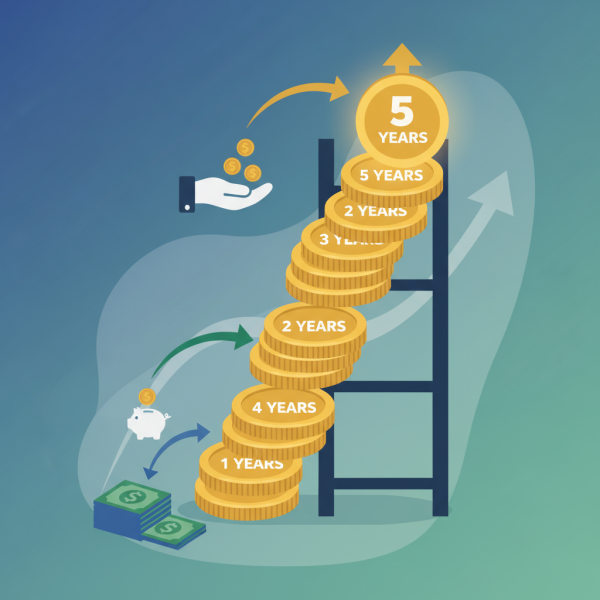
A CD ladder is a savings strategy that involves dividing a larger sum of money into several smaller portions and investing each portion in a CD with a different maturity date. Instead of putting all your money into a single CD for a fixed term, you spread it across multiple CDs that mature sequentially. For instance, you might open a 1-year CD, a 2-year CD, a 3-year CD, a 4-year CD, and a 5-year CD, each with an equal amount of your total investment. The idea is that as each CD matures, you reinvest the principal and interest into a new CD at the longest available term in your ladder, typically the 5-year term, which generally offers the highest interest rates. This systematic approach ensures that you always have a CD maturing at regular intervals, providing you with opportunities to access your funds or to reinvest at current market rates, thereby maintaining both liquidity and a strong average yield.
This strategy effectively smooths out the impact of interest rate fluctuations. If rates rise, you can reinvest your maturing CDs at higher rates. If rates fall, you still have some funds locked into longer-term, higher-rate CDs, protecting your overall return. It’s a versatile tool for managing both interest rate risk and the need for periodic access to funds without incurring penalties or sacrificing potential earnings on longer-term investments. The simplicity of the concept belies its effectiveness in striking a crucial balance for savers.
Why Consider a CD Ladder?
The primary appeal of a CD ladder lies in its ability to marry two seemingly opposing financial goals: maximizing interest earnings and maintaining liquidity. Traditional CDs often force a choice between these two. A long-term CD (e.g., 5 years) typically offers the best rates but locks up your money for an extended period. A short-term CD (e.g., 6 months) offers liquidity but usually at a much lower interest rate. A CD ladder elegantly bypasses this dilemma.
By creating a staggered maturity schedule, you benefit from the higher rates associated with longer-term CDs while still having a portion of your savings become accessible at regular intervals. This means if you need cash for an unexpected expense, a portion of your investment will likely be maturing soon, allowing you to access funds without breaking a longer-term CD and incurring penalties. Furthermore, CD ladders offer a natural hedge against interest rate volatility. In a rising interest rate environment, as your shorter-term CDs mature, you can reinvest them at the new, higher prevailing rates, effectively allowing your ladder to “climb” to better returns. Conversely, in a falling rate environment, your longer-term CDs protect a portion of your portfolio from rate declines, ensuring a consistent stream of higher-yield income for a longer period. It’s a dynamic strategy for a dynamic financial world.
How to Build a CD Ladder
Building a CD ladder is a straightforward process, though it requires some initial planning. Here’s a step-by-step guide to help you construct your own effective CD ladder:
- Determine Your Total Investment: Decide on the total amount of money you want to allocate to your CD ladder. This amount should be money you don't anticipate needing immediate access to, though the ladder structure provides more flexibility than a single CD.
- Choose Your Ladder Length: Common ladder lengths are 3-year or 5-year. A 5-year ladder, for example, would involve five CDs maturing annually. The length impacts both your average interest rate and how frequently a portion of your funds becomes available.
- Divide Your Investment: Split your total investment into equal segments. If you have $10,000 and opt for a 5-year ladder, you would create five $2,000 segments.
- Open CDs with Staggered Maturities: Invest each segment into a CD with a different maturity date. For our 5-year, $10,000 example, you would open a 1-year CD for $2,000, a 2-year CD for $2,000, a 3-year CD for $2,000, a 4-year CD for $2,000, and a 5-year CD for $2,000.
- Reinvest Upon Maturity: The crucial step to maintain the ladder is reinvestment. When your first CD (the 1-year CD in our example) matures, you take the principal and any accumulated interest and immediately reinvest it into a new 5-year CD. This effectively “rolls” your ladder, ensuring you always have a CD maturing each year while continually pushing your money into the longest, typically highest-yielding, term available within your structure.
This process continues year after year. As each subsequent CD matures, you reinvest it into a new 5-year CD, continuously benefiting from the longer-term rates while maintaining annual liquidity. It’s a disciplined approach that automates the pursuit of better returns without sacrificing flexibility.
Benefits of a CD Ladder
Implementing a CD ladder offers several compelling advantages for the astute saver:
- Higher Average Interest Rates: By consistently investing in the longest rung of your ladder, you capture higher interest rates that are typically offered for longer commitments, boosting your overall portfolio yield compared to holding only short-term CDs or standard savings accounts.
- Improved Liquidity: With a portion of your funds maturing at regular intervals (e.g., annually), you gain predictable access to your cash without incurring early withdrawal penalties. This built-in liquidity is a significant advantage over a single, long-term CD.
- Reduced Interest Rate Risk: CD ladders mitigate interest rate risk, both rising and falling. In a rising rate environment, you can reinvest maturing CDs at higher rates. In a falling rate environment, you still have funds locked into previously higher rates, protecting your returns.
- Financial Discipline: The structure of a CD ladder encourages systematic saving and reinvestment. It creates a routine where you actively manage a portion of your savings, fostering good financial habits and ensuring your money is always working efficiently for you.
- Flexibility for Financial Goals: The scheduled maturities can align with various financial goals, such as tuition payments, down payments on a home, or simply creating an emergency fund that earns more than a typical checking account.
Potential Drawbacks and Considerations
While CD ladders offer numerous benefits, it's also important to be aware of potential drawbacks and factors to consider before committing to this strategy.
One primary consideration is the administrative effort involved. Managing multiple CDs, tracking their maturity dates, and initiating timely reinvestments can require more attention than simply letting a single savings account accrue interest. While not overly complex, it does demand a level of financial engagement.
Another point is the potential for early withdrawal penalties. While the ladder structure improves liquidity at maturity, if an unforeseen emergency requires access to funds before any CD matures, you would still face penalties for breaking a CD early. Therefore, it's crucial to ensure the money allocated to the ladder is genuinely surplus to your immediate needs.
Furthermore, the effectiveness of a CD ladder is somewhat tied to the interest rate environment. In a prolonged period of very low or declining interest rates, the “climbing” benefit of reinvesting at higher rates diminishes. However, even in such environments, a ladder still provides better average rates than short-term options and offers more liquidity than a single long-term CD.
Finally, remember that CDs are FDIC-insured, typically up to $250,000 per depositor, per institution, per ownership category. If you have a very large sum, you might need to spread your CDs across multiple banks to ensure full FDIC coverage, adding to the administrative layer.
Advanced CD Ladder Strategies
Beyond the basic structure, savvy investors can fine-tune their CD ladders for even greater optimization. One common modification is varying the length of the ladder or the intervals between maturities. Instead of annual maturities, you might opt for a ladder with CDs maturing every six months (e.g., 6-month, 12-month, 18-month, 24-month CDs), offering even greater liquidity, albeit potentially at slightly lower average rates. Conversely, you could extend the intervals to every two years if your liquidity needs are less frequent.
Another strategy involves “barbell” or “bullet” approaches. A barbell strategy might focus on very short-term and very long-term CDs, leaving out the mid-range maturities, to capture both maximum liquidity and maximum yield. A bullet strategy involves staggering CDs to all mature around a specific future date, ideal for a targeted future expense like college tuition or a large down payment. Exploring different financial institutions can also yield better rates. Online banks often offer more competitive CD rates than traditional brick-and-mortar banks, so shopping around is always advisable to maximize your returns within your ladder structure.
Summary
CD ladders represent an intelligent and adaptable strategy for individuals seeking to enhance their savings without completely sacrificing access to their funds. By systematically staggering the maturity dates of multiple Certificates of Deposit, you can effectively balance the pursuit of higher interest rates—typically associated with longer-term investments—with the essential need for periodic liquidity. This approach not only provides consistent opportunities to access or reinvest portions of your savings but also acts as a robust hedge against fluctuations in interest rates. Building a CD ladder involves determining your investment, choosing a ladder length, dividing your funds, and committing to reinvesting maturing CDs into the longest term available. While requiring a bit of initial setup and ongoing attention, the benefits of improved liquidity, higher average returns, and reduced interest rate risk make CD ladders a valuable tool in any financially savvy individual's toolkit, offering a disciplined path to growing your wealth strategically.
Comprehension questions
 What is the primary benefit of a CD ladder over investing in a single long-term CD?How does a CD ladder help mitigate the risk of fluctuating interest rates?Describe the step-by-step process of building a basic 5-year CD ladder.What are two potential drawbacks or considerations when deciding to implement a CD ladder strategy?