
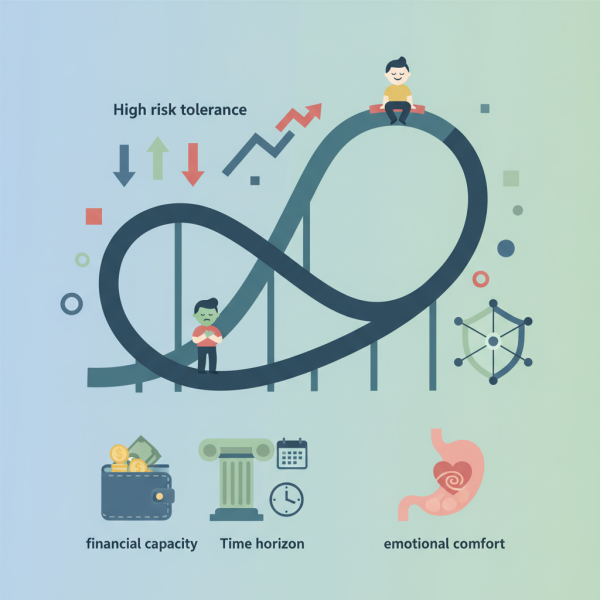
Market Swings and You Personal Risk Tolerance
What you'll learn
 Defining Risk ToleranceAssessing Personal Financial RiskAligning Investments with GoalsStrategies for Market Volatility
What Exactly is Risk Tolerance?
Embarking on a journey to financial independence often involves investing, and with investing comes the inherent presence of market volatility. One of the most critical, yet frequently overlooked, aspects of successful long-term investing is understanding your personal risk tolerance. This isn't just about how much money you can afford to lose; it's deeply rooted in your emotional and psychological comfort with market fluctuations. Accurately assessing your risk tolerance is fundamental to building an investment strategy that you can stick with through thick and thin, preventing rash decisions born of fear or greed during turbulent times.
Risk tolerance refers to the degree of variability in investment returns that an investor is willing to withstand. It's a measure of your psychological willingness to take risks. This is distinct from "risk capacity," which is your financial ability to take risks. For example, a young professional with stable income and no dependents might have a high risk capacity because they have many years to recover from potential losses. However, if that same individual is emotionally uncomfortable seeing their portfolio value drop by 10% or 20%, their risk tolerance might be low. A successful investment strategy balances both your willingness (tolerance) and your ability (capacity) to take on risk.
Why Your Stomach Matters: The Emotional Rollercoaster
Investing can be an emotional rollercoaster. When the market is booming, euphoria can tempt investors to take on more risk than they should. Conversely, when the market takes a dive, fear can lead to panic selling, locking in losses and missing out on subsequent recoveries. Your "stomach" represents your emotional fortitude in the face of these ups and downs. If you're constantly checking your portfolio, losing sleep over market headlines, or feeling an intense urge to sell when prices fall, your current investment strategy might exceed your emotional risk tolerance. Recognizing these emotional triggers is a crucial step towards building a sustainable financial plan.
Consider these questions when thinking about your emotional comfort:
- How would you react if your investment portfolio dropped by 10% in a month?
- Would a 20% loss make you consider selling all your investments?
- Do you find yourself constantly worrying about market news?
- Are you comfortable with the idea that your investment value could fluctuate significantly year-to-year?
Why Your Wallet Matters: Financial Capacity for Risk
Beyond emotions, your "wallet" — your financial situation — plays an equally vital role in determining appropriate risk levels. Your financial capacity for risk is about how much financial loss you can truly afford without jeopardizing your current or future financial goals. This is often more objective than emotional tolerance.
Key factors that influence your financial risk capacity include:
- Time Horizon: How long until you need the money? Longer time horizons generally allow for higher risk as there's more time to recover from downturns.
- Income Stability: Do you have a stable job with consistent income? A secure income stream provides a buffer against market volatility.
- Emergency Fund: Do you have 3-6 months' worth of living expenses saved in an easily accessible, low-risk account? This fund prevents you from needing to sell investments at a loss during an emergency.
- Existing Debts: High-interest debt can severely limit your capacity to take on investment risk, as paying down debt often yields a guaranteed return.
- Financial Goals: Are you saving for a down payment in two years or retirement in thirty? Short-term goals typically warrant lower-risk investments.
Without adequate financial capacity, even a high emotional tolerance for risk can lead to disastrous outcomes if unforeseen circumstances force you to liquidate assets at an inopportune time.
Factors Influencing Your Risk Tolerance
Your risk tolerance isn't a fixed trait; it can evolve. Several factors shape it:
Age and Stage of Life: Younger investors typically have a longer time horizon, allowing them to ride out market dips. As you approach retirement, capital preservation often becomes a higher priority.
Investment Knowledge and Experience: Greater understanding of market mechanisms, historical trends, and different asset classes can increase your comfort with risk. Experience of surviving past downturns can also build resilience.
Personality Traits: Some individuals are naturally more cautious or adventurous. Self-awareness of your general approach to risk in life can offer clues about your investment risk tolerance.
Financial Goals: Aggressive growth goals might necessitate higher risk, while conservative goals like preserving capital require lower risk.
Current Financial Situation: A robust emergency fund, stable income, and low debt can increase your capacity and potentially your tolerance for risk.
Assessing Your Personal Risk Tolerance
The best way to determine your risk tolerance is through a combination of self-reflection and objective tools. Many financial advisors use risk assessment questionnaires that ask a series of questions about your financial situation, emotional reactions to market scenarios, and investment preferences. These questionnaires are designed to provide a numerical or categorical score (e.g., conservative, moderate, aggressive) that helps guide investment decisions.
Beyond questionnaires, engage in honest self-assessment. Imagine specific market scenarios. What if your portfolio lost 25% of its value overnight? Would you panic, or would you see it as a buying opportunity? Your gut reaction often reveals more than a theoretical answer. Discuss your thoughts with a trusted financial professional who can provide objective insights.
Aligning Your Investments with Your Tolerance
Once you understand your risk tolerance and capacity, the next crucial step is to align your investment portfolio accordingly. If you have a low tolerance, a portfolio heavily weighted towards volatile stocks might lead to anxiety and poor decision-making. Conversely, a very conservative portfolio might not generate enough returns to meet long-term goals for someone with a high tolerance and capacity.
Investment options generally fall along a risk spectrum:
- Lower Risk: Savings accounts, Certificates of Deposit (CDs), money market funds, U.S. Treasury bonds, high-quality corporate bonds. These offer stability but typically lower returns.
- Moderate Risk: Balanced mutual funds (mix of stocks and bonds), dividend stocks, real estate investment trusts (REITs). These offer a balance of growth and income.
- Higher Risk: Individual growth stocks, sector-specific funds, small-cap stocks, emerging market investments, cryptocurrencies. These have potential for higher returns but also greater potential for loss.
The key is to create a diversified portfolio that matches your unique profile, ensuring you're comfortable with potential fluctuations while still progressing towards your financial objectives.
The Importance of Diversification
Diversification is a powerful tool to manage risk, regardless of your tolerance level. By spreading your investments across different asset classes (stocks, bonds, real estate), industries, and geographies, you reduce the impact of a poor performance in any single area. This doesn't eliminate risk entirely, but it smooths out the ride, making market volatility more manageable for your stomach and protecting your wallet from catastrophic losses in one sector.
Regular Review and Adjustment
Your risk tolerance is not set in stone. Life events such as marriage, starting a family, job changes, receiving an inheritance, or nearing retirement can all significantly alter your financial capacity and emotional comfort with risk. It's essential to review your risk tolerance and investment strategy periodically, ideally once a year or after any major life change. This ensures your portfolio remains aligned with your evolving circumstances and goals.
Summary
Understanding your personal risk tolerance is an indispensable component of successful financial planning and investing. It involves a dual assessment of your emotional comfort with market fluctuations ("stomach") and your financial ability to absorb potential losses ("wallet"). Factors like age, financial goals, income stability, and investment knowledge all play a role in shaping this tolerance. By honestly assessing these elements, utilizing tools like risk questionnaires, and regularly reviewing your strategy, you can build a diversified investment portfolio that not only helps you achieve your financial aspirations but also allows you to navigate market volatility with confidence and peace of mind. Your financial journey will be smoother and more successful when your investment choices are truly aligned with who you are as an investor.
Comprehension questions
 Name three factors that influence an individual's financial capacity for risk.How can honest self-assessment, beyond questionnaires, help in determining personal risk tolerance?Why is regular review and adjustment of your risk tolerance and investment strategy important?