
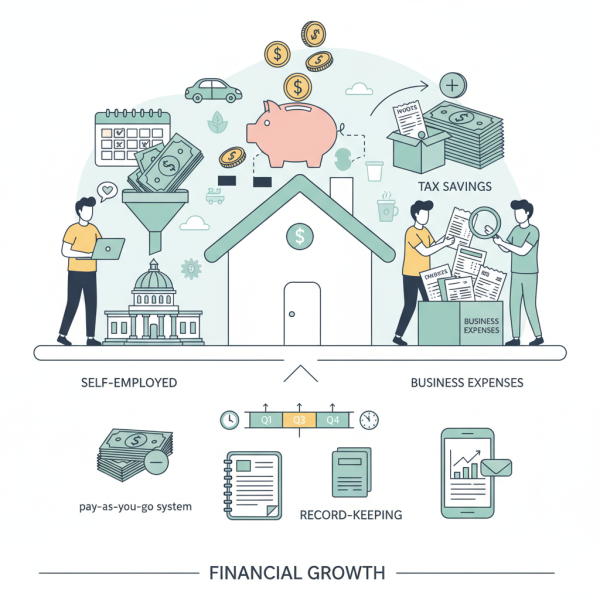
Self Employment Estimated Tax Payments and Deductible Expenses
What you'll learn
 Understanding Estimated Tax PaymentsMaximizing Business Expense DeductionsImportance of Diligent Record-KeepingProactive Year-Round Tax Planning
Embarking on the journey of self-employment offers unparalleled freedom and flexibility, but it also introduces a unique set of financial responsibilities, particularly when it comes to taxes. Unlike traditional employees whose taxes are withheld from each paycheck, self-employed individuals are responsible for calculating, paying, and reporting their own taxes. This means understanding and diligently managing quarterly estimated payments and meticulously tracking deductible business expenses. Mastering these two critical areas is not just about compliance; it's about optimizing your financial health, avoiding penalties, and maximizing your take-home income. For those striving to be more financially savvy, navigating the landscape of self-employment taxes can transform a potential headache into a powerful tool for financial growth.
Understanding Estimated Taxes: Your Quarterly Obligation
The "pay-as-you-go" system is a cornerstone of the U.S. tax structure, and for the self-employed, this translates into estimated tax payments. These are payments made directly to the IRS (and often your state tax agency) throughout the year, designed to cover your income tax, self-employment tax (Social Security and Medicare), and any other taxes you might owe. If you expect to owe at least $1,000 in tax for the year from your self-employment income, you're generally required to make estimated payments.
Calculating these payments requires a forecast of your annual income and expenses. This can be challenging for new entrepreneurs or those with fluctuating income, but it's a vital step. You'll use Form 1040-ES to guide your calculations, estimating your adjusted gross income, deductions, credits, and the total tax you expect to owe. The total estimated tax is then typically divided into four equal payments, due on specific dates throughout the year.
- First Quarter (January 1 to March 31): Due April 15
- Second Quarter (April 1 to May 31): Due June 15
- Third Quarter (June 1 to August 31): Due September 15
- Fourth Quarter (September 1 to December 31): Due January 15 of the following year
It's important to remember that if any of these dates fall on a weekend or holiday, the deadline shifts to the next business day. Missing these deadlines or significantly underpaying can lead to penalties, which is why accurate and timely payments are so crucial.
The Importance of Accurate Estimated Payments
Underpaying your estimated taxes can result in an underpayment penalty from the IRS. This penalty is calculated based on how much you underpaid and for how long. While there are safe harbor rules that can help you avoid penalties (generally, if you pay at least 90% of your current year's tax liability or 100% of your prior year's tax liability, whichever is smaller), it’s always best to aim for accuracy.
What if your income fluctuates significantly? Many self-employed individuals experience this. If you anticipate a change in income or deductions during the year, you can (and should) adjust your estimated payments for subsequent quarters. Don't wait until year-end to reconcile; proactively update your projections. For instance, if you have a particularly profitable quarter, you might need to increase your payment for the next quarter to avoid a shortfall. Conversely, a slow period might warrant a reduction. Regular check-ins with your financial performance are key.
Maximizing Deductible Business Expenses
One of the significant advantages of self-employment is the ability to deduct ordinary and necessary business expenses. An "ordinary" expense is common and accepted in your industry, while a "necessary" expense is helpful and appropriate for your business. These deductions reduce your taxable income, thereby lowering your overall tax bill. However, it's critical that these expenses are truly for business purposes and not personal.
The range of potential deductions is broad, encompassing everything from office supplies to professional development. Understanding which expenses qualify can significantly impact your tax liability and put more money back into your pocket. Many self-employed individuals overlook legitimate deductions simply because they aren't aware or don't keep proper records.
Common Deductible Expenses:
- Home Office Deduction: If you use a part of your home exclusively and regularly for your business.
- Supplies and Equipment: Office supplies, software, tools, and business-related equipment.
- Mileage and Vehicle Expenses: Travel for business meetings, client visits, or to purchase supplies.
- Health Insurance Premiums: If you're self-employed and not eligible to participate in an employer-sponsored health plan.
- Professional Development: Courses, seminars, and subscriptions related to your trade or business.
- Advertising and Marketing: Costs associated with promoting your business.
- Professional Fees: Payments to accountants, lawyers, or consultants.
- Retirement Contributions: Contributions to self-employed retirement plans like a SEP IRA or Solo 401(k) are often deductible and offer significant tax advantages.
- Business Travel: Expenses for overnight stays for business purposes, including lodging and meals (subject to limits).
Each of these deductions comes with specific IRS rules and requirements, so it is always wise to consult official IRS publications or a tax professional to ensure compliance.
Essential Record-Keeping for Tax Success
Accurate and organized record-keeping is the bedrock of effective tax planning for the self-employed. Without proper documentation, even legitimate deductions can be challenged by the IRS. Good records provide proof of your income and expenses, support the information you report on your tax returns, and simplify the process of preparing your taxes.
Starting from day one, implement a system to track every financial transaction related to your business. This includes income received, all business expenses, bank statements, invoices, and receipts. The distinction between business and personal finances should be crystal clear; ideally, maintain separate bank accounts and credit cards for your business.
Key Record-Keeping Practices:
- Digital vs. Physical: While physical receipts are acceptable, digitizing them through scanning or using expense tracking apps can save space and simplify retrieval.
- Categorize Expenses: Group similar expenses together (e.g., "office supplies," "travel," "marketing") to make tax preparation easier.
- Software Solutions: Utilize accounting software (like QuickBooks Self-Employed, FreshBooks, or Wave) to automate tracking, generate reports, and integrate with banking.
- Regular Review: Don't wait until tax season. Review your financial records monthly or quarterly to catch errors, identify potential deductions, and assess your financial health.
- Backup Your Data: Ensure all digital records are regularly backed up to prevent loss.
Diligent record-keeping not only helps you during tax season but also provides valuable insights into your business's financial performance, aiding in better decision-making throughout the year.
Proactive Tax Planning Strategies
Effective tax management for the self-employed isn't a once-a-year event; it's a continuous process. Adopting a proactive approach can significantly reduce stress and improve your financial outcomes. Beyond just paying estimated taxes and tracking expenses, consider these broader strategies:
- Set Aside Funds: A common rule of thumb is to set aside 25-35% of every payment you receive into a separate savings account specifically for taxes. This ensures the money is available when estimated payments are due.
- Year-Round Reviews: Schedule regular financial check-ups throughout the year. Quarterly reviews of your income, expenses, and tax liability estimates can help you adjust your strategy as needed.
- Leverage Retirement Accounts: As mentioned, contributions to self-employed retirement plans like a SEP IRA or Solo 401(k) can be powerful tax deferral tools, reducing your taxable income while building wealth for your future.
- Consult a Tax Professional: A qualified tax advisor specializing in self-employment taxes can provide personalized guidance, help you identify overlooked deductions, ensure compliance, and strategically plan for future tax years. Their expertise can often save you more money than their fees.
Summary: Your Path to Self-Employed Tax Confidence
Managing taxes as a self-employed individual might seem daunting, but by focusing on a few key principles, you can transform it into a manageable and even empowering aspect of your business. Proactive management of quarterly estimated payments ensures you meet your obligations and avoid penalties. Diligent identification and tracking of deductible business expenses are crucial for reducing your taxable income and maximizing your savings. Establishing robust record-keeping practices provides the foundation for accuracy and eases tax preparation. Finally, adopting a year-round tax planning mindset, including setting aside funds, regular financial reviews, leveraging retirement accounts, and consulting professionals, will build confidence and contribute significantly to your overall financial well-being. By integrating these practices into your business operations, you can navigate the complexities of self-employment taxes with greater ease and financial savvy.
Comprehension questions
 What is the primary purpose of estimated tax payments for self-employed individuals?Name three common types of deductible business expenses mentioned in the article.Why is diligent record-keeping crucial for self-employed individuals when it comes to taxes?What are some of the potential consequences of underpaying estimated taxes?