
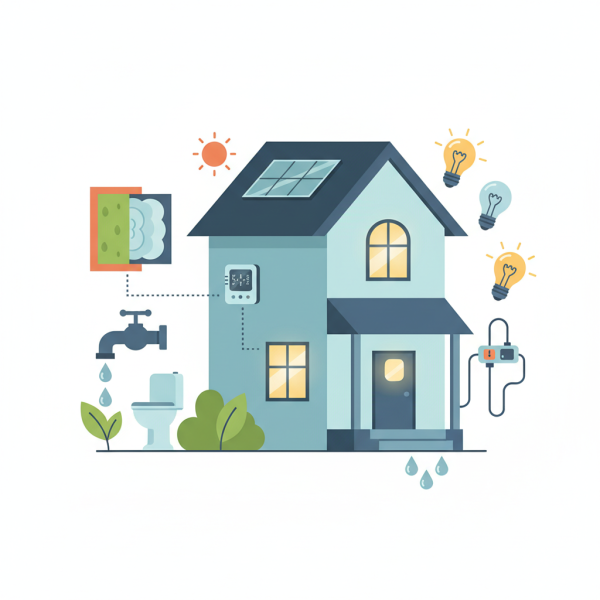
Practical Home Upgrades for Lower Utility Bills
What you'll learn
 Energy-Efficient LightingClimate Control OptimizationWater Saving FixturesSmart Appliance Usage
In an era where every penny counts, mastering your household budget is a top priority for financially savvy individuals. While big-ticket expenses often grab the spotlight, the recurring costs of utility bills can silently drain your wallet month after month. The good news is that many practical, accessible home upgrades exist that not only reduce your electricity and water consumption but also contribute significantly to long-term savings. By strategically investing in these improvements, you can transform your home into a beacon of efficiency, leading to lighter utility bills and a healthier financial outlook. This guide will walk you through actionable steps to achieve substantial savings, turning your residence into a powerhouse of fiscal prudence.
The Illumination Revolution: Efficient Lighting Solutions
One of the simplest yet most impactful upgrades you can make is to your home's lighting. Traditional incandescent bulbs are notorious energy hogs, converting most of their energy into heat rather than light. Embracing modern lighting technologies is a brilliant first step towards utility efficiency.
LED Lighting: Light Emitting Diodes (LEDs) have revolutionized home lighting. They consume significantly less electricity than incandescent or even compact fluorescent (CFL) bulbs, lasting upwards of 25,000 hours or more. Swapping out old bulbs for LEDs throughout your home can immediately slash your lighting electricity costs. While the upfront cost might be slightly higher per bulb, the longevity and energy savings quickly recoup the investment.
Smart Lighting Systems: Taking lighting efficiency a step further, smart lighting systems offer unparalleled control and convenience. These systems allow you to control lights remotely via a smartphone app, set schedules, and even integrate with voice assistants. Features like dimming capabilities further reduce energy use, and occupancy sensors ensure lights are only on when a room is in use. This level of automation prevents wasted energy from forgotten lights, enhancing both savings and comfort.
Mastering Your Home's Climate Control for Maximum Savings
Heating and cooling typically account for the largest portion of a home's energy consumption. Optimizing your climate control systems can lead to substantial reductions in your electricity bill.
Smart Thermostats: Upgrading to a smart thermostat is a cornerstone of energy efficiency. These devices learn your preferences and daily routines, automatically adjusting temperatures to save energy when you're away or asleep. Many models offer remote control via smartphone, allowing you to fine-tune your home's climate from anywhere. Some even provide detailed energy reports, helping you understand and further refine your usage patterns. The ability to program different temperature settings for various times of the day or week can yield significant savings without sacrificing comfort.
Enhanced Insulation and Sealing: Your home's envelope plays a crucial role in maintaining a comfortable indoor temperature. Poor insulation and air leaks force your heating and cooling systems to work harder, consuming more energy. Addressing these issues is a fundamental step towards efficiency.
- Attic Insulation: The attic is often the biggest culprit for heat loss in winter and heat gain in summer. Adding or upgrading insulation here can dramatically improve your home's thermal performance.
- Wall Insulation: While more involved, improving wall insulation in older homes can yield substantial benefits.
- Window and Door Sealing: Drafts around windows and doors are common sources of energy waste. Simple solutions like weatherstripping and caulk can seal these gaps effectively. Consider upgrading to energy-efficient windows if your budget allows for a more significant investment, as they offer superior insulation properties.
HVAC System Maintenance: A well-maintained heating, ventilation, and air conditioning (HVAC) system operates more efficiently. Regular professional tune-ups ensure your system runs at peak performance, preventing energy waste and extending its lifespan. Simple tasks like replacing air filters every one to three months also play a vital role in maintaining airflow and efficiency.
Water Wisdom: Savings from the Tap and Beyond
Reducing water consumption not only lowers your water bill but also decreases the energy required to heat water, leading to further savings on your electricity or gas bill. Water efficiency is a dual-benefit strategy.
Low-Flow Fixtures: Upgrading to low-flow showerheads, faucets, and toilets is a remarkably effective way to conserve water without noticing a significant difference in performance. Modern low-flow showerheads provide ample water pressure while using significantly less water per minute. Dual-flush toilets offer the choice between a full flush for solids and a reduced flush for liquids, drastically cutting down on water usage compared to older, single-flush models.
Leak Detection and Repair: A silent drip or a hidden pipe leak can waste thousands of gallons of water annually. Regularly check for leaks in faucets, toilets, and irrigation systems. Even a small, continuous drip can add up quickly on your water bill. Learning how to check your water meter for unexplained usage can help identify unseen leaks. Promptly repairing any leaks you find is crucial for both water conservation and preventing potential structural damage to your home.
Energy-Efficient Appliances: When it's time to replace your washing machine or dishwasher, opt for ENERGY STAR certified models. These appliances are designed to use less water and energy, leading to significant savings over their lifespan. Modern washing machines, for example, often use less water per load than older models, and many dishwashers have sensors that adjust water usage based on the soil level of your dishes.
Smart Appliances and the Battle Against Phantom Load
Beyond the core systems, individual appliances and your charging habits contribute to your utility bills.
ENERGY STAR Appliances: From refrigerators to ovens, many household appliances now come with ENERGY STAR certification, indicating they meet strict energy efficiency guidelines set by the U.S. Environmental Protection Agency. When purchasing new appliances, prioritize these models to ensure you're making an energy-smart investment. While the initial cost might be slightly higher, the long-term operational savings often outweigh the difference.
Combating Phantom Load: Many electronic devices continue to draw a small amount of power even when turned off or in standby mode. This "phantom load" or "vampire power" can surprisingly add up, accounting for a noticeable portion of your electricity bill.
- Unplug Devices: The simplest solution is to unplug chargers and electronics when not in use.
- Smart Power Strips: These strips can detect when devices are powered off or in standby and automatically cut power to those outlets, eliminating phantom drain.
- Timers: Use timers for devices that only need power during certain hours, like coffee makers or outdoor lights.
Outdoor Utility Savings: Extending Efficiency Beyond Your Walls
Your outdoor space also offers opportunities for utility savings, particularly concerning water and sometimes electricity.
Efficient Irrigation Systems: If you irrigate your lawn or garden, consider upgrading to a smart irrigation controller. These systems use local weather data, soil moisture sensors, and plant type information to water only when and where it's needed, preventing overwatering and reducing water waste. Drip irrigation systems are also highly efficient for gardens and flowerbeds, delivering water directly to plant roots with minimal evaporation.
Strategic Landscaping: Thoughtful landscaping can naturally reduce your home's heating and cooling needs. Planting deciduous trees on the south and west sides of your house can provide shade in the summer, reducing heat gain, and allow sunlight to warm your home in the winter once their leaves fall. Evergreen shrubs planted close to your home can act as windbreaks, reducing heat loss during colder months.
Summary: A Financially Savvy Home is an Efficient Home
Embarking on a journey to improve your home's utility efficiency is a rewarding endeavor, both for your wallet and the environment. By focusing on practical upgrades like LED lighting, smart thermostats, enhanced insulation, low-flow water fixtures, and ENERGY STAR appliances, you can significantly reduce your monthly electricity and water bills. Incorporating habits such as prompt leak repair and combating phantom load further solidifies your financial gains. These investments, whether large or small, contribute to a more sustainable lifestyle and a more robust personal budget, proving that a little efficiency goes a long way in making your home a sanctuary of savings.
Comprehension questions
 What are two key benefits of upgrading to LED lighting?How do smart thermostats contribute to energy savings in a home?What are two examples of low-flow fixtures that help conserve water?