
Introduction to Zero-Based Budgeting: Assign Every Dollar a Purpose
What you'll learn
 Intentional Money AllocationFinancial Awareness and ControlGoal-Oriented SpendingMonthly Budget Reset
Are you tired of feeling like your money disappears without a trace each month? Do you wish you had a clearer picture of where every dollar goes and a plan for where it should go? If so, then it’s time to introduce yourself to a powerful financial strategy known as Zero-Based Budgeting (ZBB). This method isn't just about tracking spending; it's about proactively assigning a specific job to every single dollar you earn before the month even begins, ensuring that your income minus your expenses always equals zero. It transforms your financial approach from reactive to proactive, giving you complete control and clarity over your money.
What is Zero-Based Budgeting?
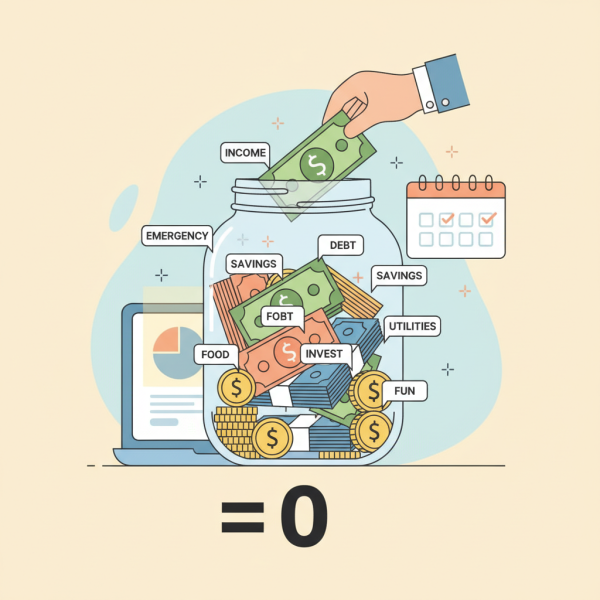
Zero-Based Budgeting is a financial planning method where all expenses must be justified for each new period, typically a month. Instead of simply adjusting last month's budget, you start from scratch. Every dollar of your income is allocated to a specific category – whether it's bills, savings, debt repayment, or discretionary spending. The core principle is that your income minus your expenses should equal zero. This doesn't mean you spend all your money; it means every dollar has a purpose, even if that purpose is to be saved or invested.
Think of it like this: imagine you have a jar of money. With ZBB, you don't just spend from the jar; you label every single bill inside that jar for a specific use before you even reach for it. This rigorous approach forces you to be intentional with your finances, preventing "leakage" where money mysteriously vanishes without a clear reason or benefit to you.
Why Zero-Based Budgeting? The Benefits
The advantages of adopting a Zero-Based Budgeting system are numerous, especially for individuals aiming to gain better control over their financial health. One of the primary benefits is enhanced financial awareness. By meticulously allocating every dollar, you become intimately familiar with your spending habits and financial priorities. This clarity helps identify areas where you might be overspending and opportunities for saving.
Another significant benefit is increased accountability. When every dollar has a job, you're less likely to make impulse purchases that derail your financial goals. You're consciously deciding where your money goes, rather than letting it dictate your financial situation. This method also empowers you to achieve specific financial goals faster, whether that's building an emergency fund, paying off debt, saving for a down payment, or investing for the future. With ZBB, your money is actively working towards these objectives.
Furthermore, ZBB promotes flexibility. While it sounds strict, the monthly reset allows you to adapt your budget to changing life circumstances. Had an unexpected expense? You can reallocate funds next month to recover. Received a bonus? You can consciously decide how to use that extra income to maximize its impact on your goals. It encourages a dynamic approach to money management.
How to Implement Zero-Based Budgeting: A Step-by-Step Guide
Implementing Zero-Based Budgeting might seem daunting at first, but by breaking it down into manageable steps, you'll find it's a straightforward path to financial mastery.
Step 1: Calculate Your Total Monthly Income
The very first step is to get a clear picture of how much money you have coming in. This includes all take-home pay from your job(s), any freelance income, rental income, or other regular sources of funds. Be precise and include only the net income after taxes and deductions. This is the pool of money you'll be working with.
Step 2: List All Your Expenses and Give Every Dollar a Job
This is the core of ZBB. Go through every single expense you anticipate for the upcoming month. Categorize them comprehensively. Think about:
- Fixed Expenses: These are typically the same amount each month. Examples include rent/mortgage, loan payments (car, student), insurance premiums, and subscriptions.
- Variable Expenses: These fluctuate month to month. Groceries, utilities, gas, and dining out fall into this category. You'll need to estimate these based on past spending, but be realistic.
- Discretionary Spending: This is where you allocate funds for wants rather than needs, such as entertainment, hobbies, personal care, and gifts.
- Savings and Debt Repayment: Treat these as essential expenses. Allocate funds for your emergency fund, retirement accounts, specific savings goals (vacation, down payment), and extra debt payments.
The key here is to assign a dollar amount to each category. Every dollar of your income must be assigned until your income minus your total expenses (including savings and debt payments) equals zero. If you have money left over, assign it to a savings goal or an extra debt payment. If you're in the negative, you need to go back and trim expenses until you reach zero.
Step 3: Track Your Spending Throughout the Month
A budget is only as good as your adherence to it. Throughout the month, diligently track every dollar you spend. This can be done using a budgeting app, a spreadsheet, or even a simple notebook. Compare your actual spending against your budgeted amounts for each category. This tracking helps you stay accountable and immediately identifies if you're overspending in a particular area.
Step 4: Review and Adjust
At the end of the month, take time to review your budget. How did you do? Did you stick to your categories? Were your estimates accurate? Where did you overspend, and where did you underspend? Use these insights to inform your budget for the next month. ZBB is an iterative process; each month gives you an opportunity to refine your plan and make it even more effective.
Tools and Resources for Zero-Based Budgeting
Fortunately, you don't have to tackle Zero-Based Budgeting alone with just pen and paper, though that is certainly an option. There are many digital tools available that can simplify the process and make tracking much easier. Popular budgeting apps like YNAB (You Need A Budget) are built specifically on the principles of zero-based budgeting, offering features to help you assign every dollar and track your spending in real-time. Other general budgeting apps and spreadsheet templates can also be adapted for a ZBB approach. Experiment with different options to find what best suits your personal style and needs, ensuring it helps you maintain visibility and control over your allocated funds.
Tips for Success with Zero-Based Budgeting
- Be Realistic from the Start: Don't cut everything to the bone in your first month. Start with realistic estimates for your variable expenses and adjust as you gain more insight into your actual spending.
- Automate Your Savings: Once you've assigned funds to savings goals, set up automatic transfers from your checking to your savings accounts right after you get paid. This ensures your savings "get paid first."
- Embrace the Monthly Reset: View each new month as a fresh start. Don't let past budgeting failures discourage you. Learn from them and apply those lessons to your next budget.
- Build an Emergency Fund: Prioritize allocating money to an emergency fund. This financial safety net prevents unexpected expenses from completely derailing your budget and causing you to go into debt.
- Communicate with Your Household: If you share finances with a partner or family, ensure everyone is on board and understands the budget. Open communication is crucial for collective success.
Common Challenges and How to Overcome Them
While Zero-Based Budgeting offers immense benefits, it's not without its challenges. One common hurdle is the initial time commitment required to set up and meticulously categorize everything. Overcome this by dedicating a specific block of time each month and by using budgeting tools that can automate some data entry. Another challenge is dealing with unexpected expenses. This is precisely why building an emergency fund is vital; it provides a buffer. For truly unpredictable, larger expenses, you might need to reallocate funds mid-month, but the ZBB framework prepares you to make those conscious decisions rather than spending blindly. Lastly, consistency can be tough. Make budgeting a regular habit, perhaps a weekly check-in, to stay on track and prevent your budget from becoming obsolete.
Conclusion
Zero-Based Budgeting is a transformative approach to managing your money, putting you firmly in the driver's seat of your financial future. By committing to assigning a specific job to every dollar before the month even begins, you gain unparalleled clarity, control, and confidence in your spending and saving habits. It empowers you to make intentional choices, achieve your financial goals faster, and reduce financial stress. While it requires dedication, the rewards of knowing exactly where your money is going and what it's accomplishing for you are invaluable. Embrace this method, and watch your financial life flourish.
Comprehension questions
 What is the core principle of Zero-Based Budgeting, and what does it mean for your income and expenses?Name two significant benefits an individual can gain from implementing Zero-Based Budgeting.Describe the four main steps involved in setting up and maintaining a Zero-Based Budget.Why is an emergency fund particularly important when practicing Zero-Based Budgeting, and how does it help overcome challenges?