
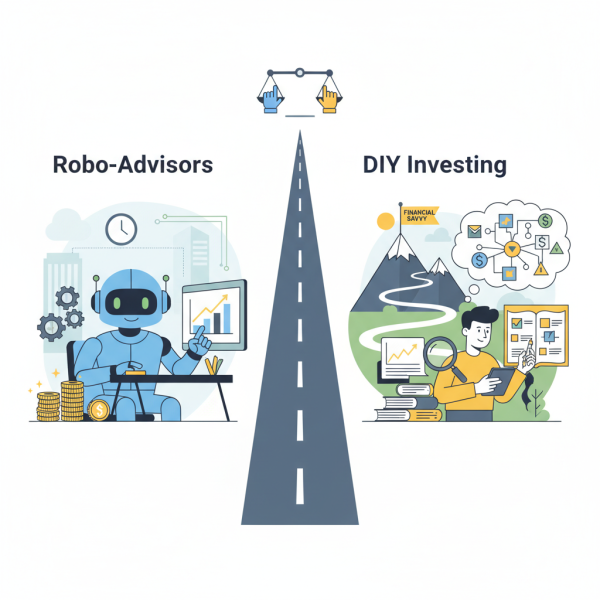
Robo-Advisors vs. DIY Investing
What you'll learn
 Automated Investing Pros and ConsSelf-Managed Investing EssentialsCost-Benefit Analysis of Investment PlatformsPersonalizing Your Investment Strategy
In the evolving landscape of personal finance, individuals seeking to grow their wealth often face a crucial decision: should they opt for the automated simplicity of a robo-advisor or take full control through do-it-yourself (DIY) investing? Both approaches offer distinct advantages and disadvantages, catering to different investor profiles, knowledge levels, and financial goals. Understanding these differences is key to making an informed choice that aligns with your financial aspirations and comfort with managing your own money. This article will delve into the nuances of each option, helping you decide which path is best suited for your journey towards financial savvy.
Understanding Robo-Advisors
Robo-advisors are digital platforms that provide automated, algorithm-driven financial planning services with little to no human intervention. They build and manage diversified investment portfolios for you based on your risk tolerance, financial goals, and time horizon. After you answer a series of questions, the robo-advisor will recommend and implement a portfolio, often comprised of exchange-traded funds (ETFs) and mutual funds.
Key Benefits of Robo-Advisors
- Accessibility and Low Minimums: Many robo-advisors have very low initial investment requirements, making professional portfolio management accessible to a broader range of investors, including those just starting out.
- Lower Fees: Compared to traditional human financial advisors who often charge a percentage of assets under management (AUM) or hourly fees, robo-advisors typically have significantly lower management fees, often ranging from 0.25% to 0.50% of AUM annually. This can lead to substantial savings over time.
- Automation and Convenience: They handle portfolio rebalancing, dividend reinvestment, and even tax-loss harvesting automatically. This "set it and forget it" approach saves time and removes the emotional component from investing.
- Diversification: Robo-advisors are designed to create well-diversified portfolios across various asset classes, helping to mitigate risk.
- Behavioral Coaching: Some platforms include features to help investors avoid common behavioral pitfalls, like panic selling during market downturns, by sticking to their long-term plan.
Potential Drawbacks of Robo-Advisors
- Limited Customization: While they offer personalization based on risk profiles, robo-advisors may not be suitable for highly complex financial situations or those requiring highly specialized investment strategies.
- Less Human Interaction: Investors who prefer face-to-face advice, personalized guidance during major life events, or a deeper understanding of their portfolio strategy might find the lack of human interaction a disadvantage. Some hybrid models exist, offering access to human advisors at a higher cost.
- May Not Be Cheapest for All: For very small portfolios, the percentage-based fees can still add up. For very large portfolios, extremely low-cost DIY options might offer even greater savings.
Exploring DIY Investing
DIY investing involves you taking full responsibility for researching, selecting, buying, and managing your own investments through a brokerage account. This means you decide which stocks, bonds, ETFs, mutual funds, or other assets to purchase, when to buy and sell them, and how to rebalance your portfolio. It requires a significant commitment to self-education and ongoing monitoring.
Key Benefits of DIY Investing
- Maximum Control: You have complete autonomy over every investment decision. This allows for highly customized portfolios tailored precisely to your specific beliefs, values, and market insights.
- Potentially Lower Costs: If you choose low-cost index funds or ETFs and avoid frequent trading with high commissions (many brokers now offer commission-free trading for stocks and ETFs), DIY investing can be the absolute cheapest way to invest, especially as your portfolio grows. You pay no management fees to an advisor.
- Learning Opportunity: Managing your own investments can be an incredible learning experience, deepening your financial literacy and understanding of markets and economics.
- Flexibility: DIY investors can react quickly to market changes or personal financial shifts, adjusting their strategy without needing to consult a third party.
Potential Drawbacks of DIY Investing
- Time Commitment: Researching investments, monitoring markets, executing trades, and rebalancing a portfolio takes a considerable amount of time and effort. This can be a significant hurdle for busy individuals.
- Requires Knowledge and Discipline: Success in DIY investing demands a solid understanding of investment principles, risk management, and market dynamics. It also requires emotional discipline to avoid impulsive decisions driven by fear or greed during market volatility.
- Risk of Poor Decisions: Without expert guidance, investors are more susceptible to making costly mistakes, such as chasing hot stocks, failing to diversify adequately, or falling victim to emotional trading.
- Can Be Overwhelming: The sheer volume of information and investment options available can be daunting for beginners, leading to analysis paralysis or poor choices.
Factors to Consider When Choosing
Time Commitment
Consider how much time you are genuinely willing and able to dedicate to your investments each week or month. If your schedule is packed and you prefer a hands-off approach, a robo-advisor’s automation will be a significant advantage. If you enjoy delving into financial research and managing details, DIY investing might appeal more.
Investment Knowledge and Confidence
Assess your current financial literacy and confidence. If you're new to investing or feel uncertain about making complex financial decisions, a robo-advisor provides a structured, guided experience. If you have a strong understanding of financial markets and trust your judgment, DIY investing empowers you to leverage that knowledge.
Costs and Fees
While robo-advisors charge management fees, they are generally much lower than traditional advisors. DIY investing incurs brokerage commissions (though many are now zero for stocks/ETFs) and expense ratios on funds. For large portfolios, even low robo-advisor fees can add up, potentially making DIY investing with low-cost index funds cheaper in the long run if executed properly.
Emotional Discipline
Market fluctuations can trigger strong emotions like fear and greed, leading to impulsive and often detrimental investment decisions. Robo-advisors help by enforcing a disciplined, long-term strategy. DIY investors must cultivate strong emotional control to stick to their plan, especially during downturns.
Financial Goals and Complexity
For straightforward goals like retirement savings or a down payment, a robo-advisor often suffices. If your financial situation is highly complex, involving multiple income streams, business investments, or unique tax considerations, you might need a more customized approach. While some advanced DIY investors can handle this, a hybrid robo-advisor or a traditional human advisor might be better equipped.
Making Your Decision
The choice between robo-advisors and DIY investing is not a one-size-fits-all answer. It's a personal decision that should be reevaluated as your financial circumstances, knowledge, and comfort levels evolve. Many investors even start with a robo-advisor to build a foundational portfolio and then gradually transition parts of their investments to a DIY approach as their confidence and expertise grow.
Summary
This article explored the fundamental differences between robo-advisors and DIY investing, two popular avenues for managing personal wealth. We discussed the benefits of robo-advisors, such as their accessibility, lower fees, and automation, alongside their drawbacks like limited customization. Conversely, we examined how DIY investing offers maximum control and potentially lower costs but demands significant time, knowledge, and emotional discipline. Key factors for making a choice, including time commitment, investment knowledge, costs, emotional discipline, and financial goals, were also highlighted to guide aspiring financially savvy individuals toward an informed investment path.
Comprehension questions
 What are three key benefits of using a robo-advisor, and how do they make investing more accessible?What is the primary advantage of DIY investing, and what are two significant commitments it requires from the investor?How does time commitment influence the choice between a robo-advisor and DIY investing?Explain how emotional discipline plays a role in successful investing, and which option (robo-advisor or DIY) might help mitigate emotional pitfalls.